Gut, Microbes and Health
The Research Group for Gut, Microbes and Health studies how diet, food ingredients and food contaminants affect the composition and activity of the intestinal bacteria and the effects that these bacteria have on the health of children and adults.
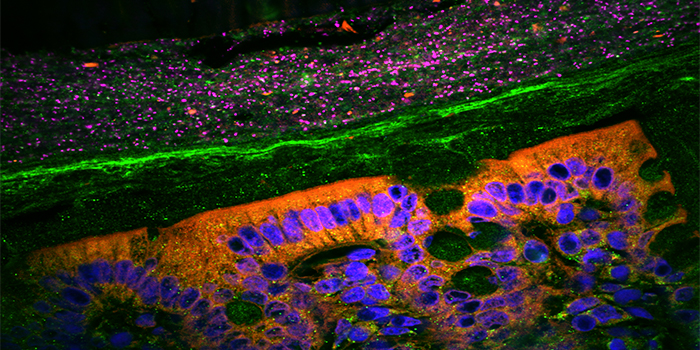
The research group investigates how diet and environmental factors in the gut affect the composition and activities of the gut microbiome, and how this, in turn, affects health. Building on this fundamental understanding, the group examines how the gut microbiome can be shaped in a targeted manner via dietary interventions to promote host health. The research also addresses how gastrointestinal digestion of foods and specific food components affect the absorption of nutrients and food contaminants. In addition, the group investigates the production and application of novel food ingredients generated by microorganisms.
Approaches and methods
- Mechanistic studies: the group studies individual gut bacterial species and complex gut microbial communities cultured with advanced gastrointestinal in vitro models to uncover cause-and-effect relationships between diet, gut environment, and the production of specific bacterial metabolites. The insights obtained from in vitro studies are combined with the in vivo experiments to investigate their physiological effects on the host.
- From digestion to absorption: the research examines the role of gastrointestinal digestion and gut microbial activity in how nutrients and food contaminants, including potentially toxic substances from foods, are absorbed in the body.
- Germ-free and gnotobiotic mouse models: Germ-free and gnotobiotic mice (ex-germ-free mice colonised with specific microbial communities) are used to study effects of the microbiome in dietary intervention studies.
- Close to the clinic: collaborations with hospitals and other academic environments make it possible to test hypotheses generated from human cohort data in laboratory experiments and validate laboratory findings in human intervention studies.
- Ingredients created by microbes: the group investigates how microorganisms can be used to generate novel food ingredients and to investigate their potential implications for health.
- Targeted modulation of the microbiome: development of strategies to modulate the composition and activities of gut bacteria in order to prevent disease and improve host health.
Collaborations and impact
The research group collaborates closely with leading clinical and academic environments in Denmark and internationally, contributing to the development of methods and practice within microbiome research. Its activities range from fundamental to applied research and support the translation of findings into knowledge that can be used in practice. Established partnerships and access to advanced facilities provide a solid platform on which insights can be tested across models and confirmed in human studies. This combination of strong partners and a robust methodological platform ensures that the research impacts and benefits both the scientific community and society.
Contact
Martin Steen Mortensen Senior Researcher, Head of Research Group Mobile: +4520724219 masmo@food.dtu.dk