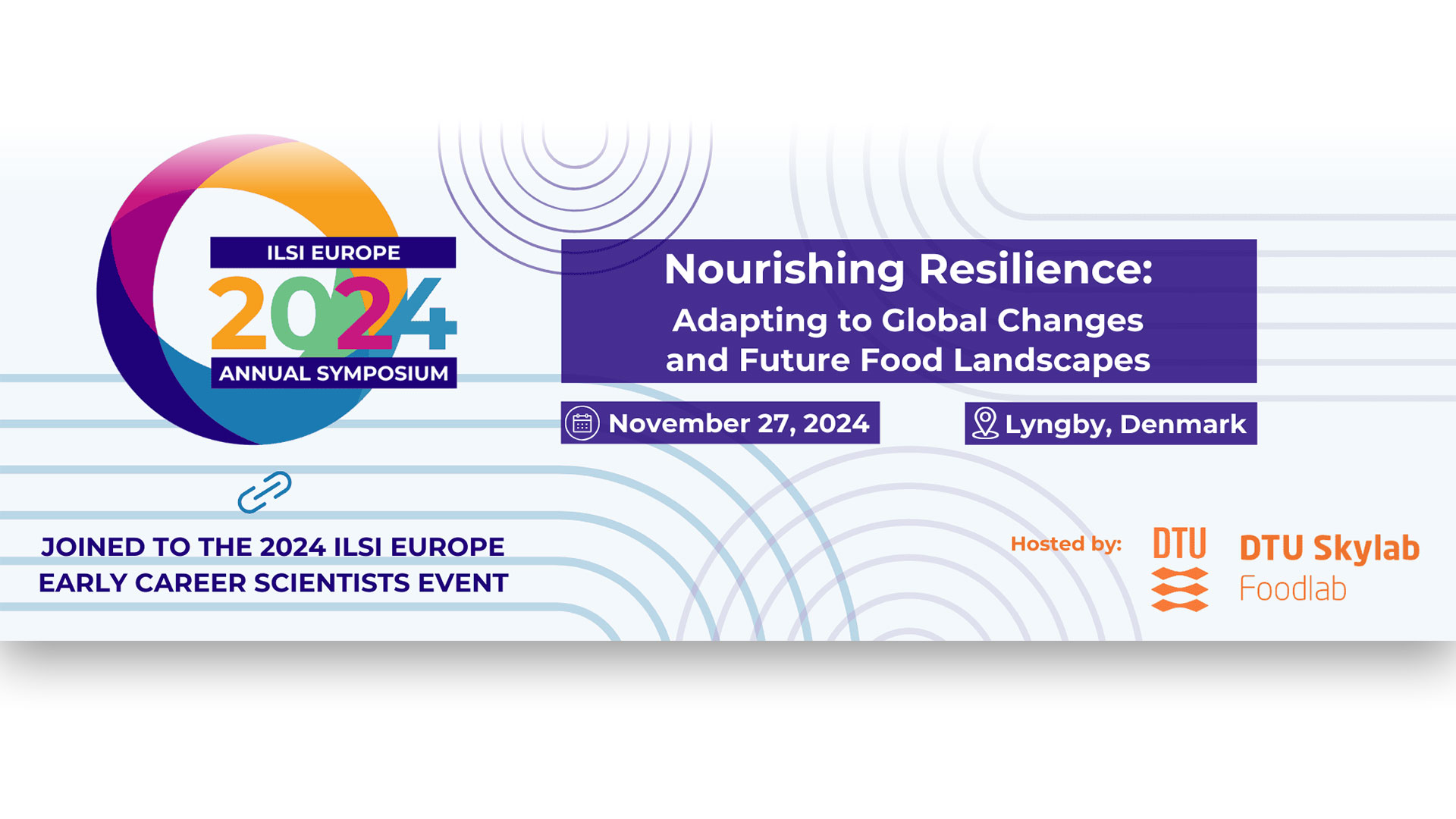
There is an urgent need to transform the food system and improve both health and the climate in a way that is also fair. Food must be healthy, accessible, and affordable for all. No country is entirely food secure, and pandemics, conflicts, and climate change have exposed the vulnerability of the food system to shocks. This is the focus of the ILSI Europe Annual Symposium (IEAS), which will take place on 27 November 2024 at DTU in Lyngby, bringing together experts from around the world under the theme: "Nourishing Resilience: Adapting to Global Changes and the Future Food Landscape."
At the event, you can attend a session on food system resilience from 14:00 to 15:30, “Redefining Resilience: Innovations for a Sustainable Food Future”. Professor Katherine Richardson from University of Copenhagen, scientific expert in planetary boundaries, and Professor Olivier Jolliet from DTU Sustain, working with life cycle assessment and impact modelling, will be talking about trajectories towards healthy and sustainable food systems.
What happens if we replace all beef with legumes?
Senior Researcher at the National Food Institute, DTU, Sara Monteiro Pires, will moderate the session. Sara Pires is from the Risk Benefit Research Group, which develops and refines models to assess the risks and benefits of various types of food and diets. She is an expert in the field of food safety, public health, and epidemiology, and her more recent research shows that increasing the consumption of plant-based foods would significantly impact both public health and the climate, but may also have negative effects, for example on profitability for food producers.
"If, as consumers, we were to replace all beef with legumes, we would see a notable reduction in serious diseases such as cancer, cardiovascular disease, and diabetes. The environment would benefit greatly, as legumes require far fewer resources than beef and emit significantly fewer greenhouse gases. However, this would also result in an economic decline for the agricultural sector unless we support the extensive production shift that agriculture would need to undergo," says Sara Monteiro Pires.
This balance between climate, health, and the economy is a key factor determining the resilience of the food system. Now you have the chance to learn more.
Time
Register for the ILSI Europe Annual Symposium (IEAS). You can get an Early Bird discount until 30 September 2024.
Venue
Glass Hall
DTU Building 101
Anker Engelunds Vej
2800 Kgs. Lyngby
Program
There are also other inspiring sessions at the Symposium. Read the full program here.