Guide to improve the detection of mineral oil contamination hidden in food
Petroleum-derived chemicals related to fuels and lubricants can sometimes be found in food causing health concerns because some of these compounds may damage DNA and increase the risk of cancer. A recent guide from, among others, the DTU National Food Institute provides new recommendations for testing these chemicals.
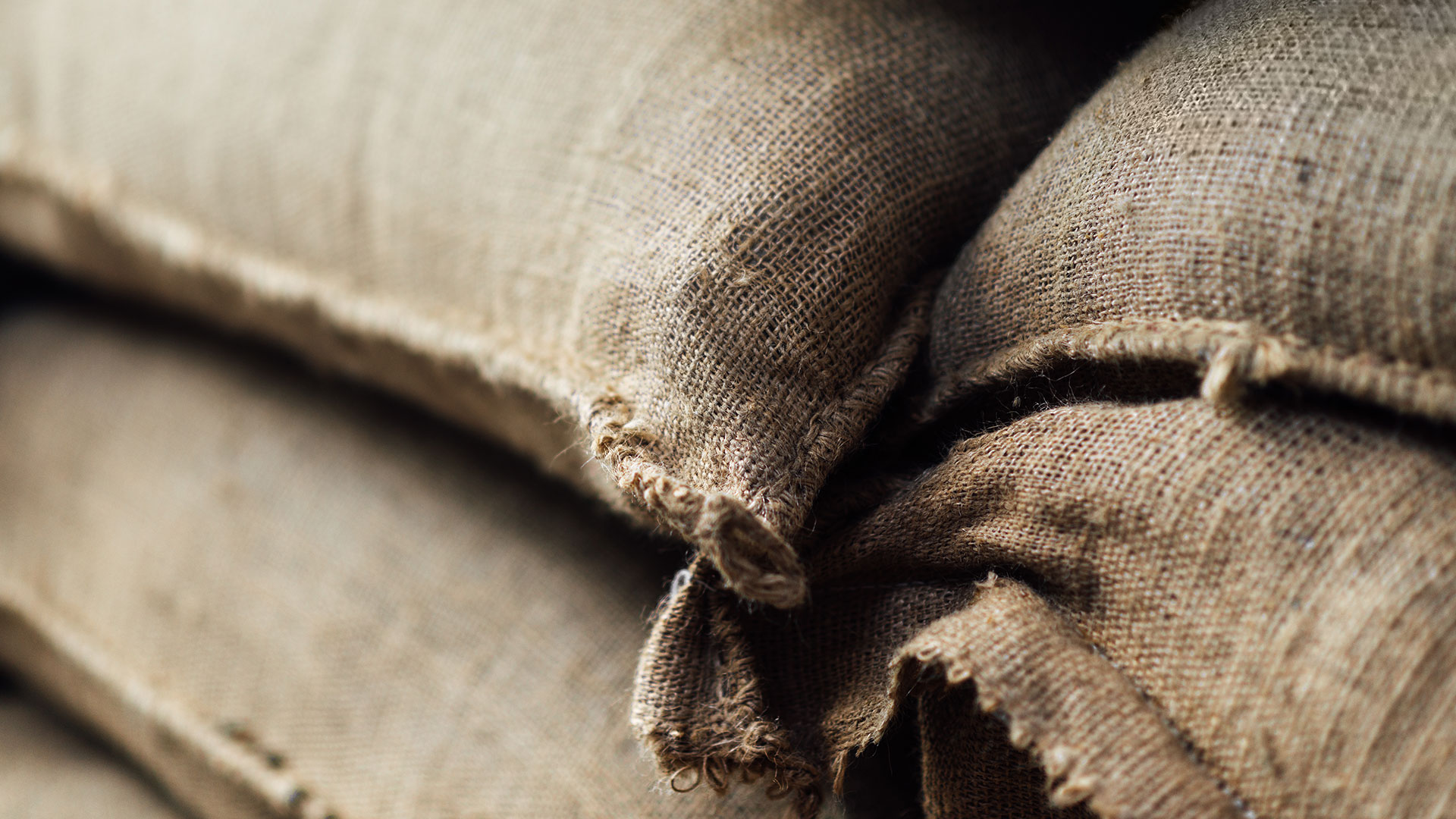
A jute bag used for packing and storing food can pose a contamination risk if not produced properly. Photo: Colourbox.
Thursday 19 February 2026
Lene Hundborg Koss
Official food control laboratories routinely detect mineral oil hydrocarbons (so-called MOH) in foods such as cereal products, cocoa beans, edible oils and baby food. To support accurate risk assessment with high-quality data, the new guide sets out recommendations for how laboratories can confirm and describe these findings.
The guide was developed by the EU Reference Laboratory for Processing Contaminants (EURL-PC – see box below) at the Research Group for Analytical Food Chemistry at the DTU National Food Institute.
It focuses on the closer identification of MOH fractions: MOSH and MOAH using comprehensive two-dimensional gas chromatography (GC×GC).
“The new guide is designed to make the distinction between MOH and other chemical compounds more reliable, providing accurate testing of contamination and facilitating decision-making related to contaminated foods,” says Alexander Montoya-Arroyo, a postdoctoral researcher at DTU National Food Institute.
The aim is to provide high-quality data for an accurate risk assessment.
Why there is increased focus on mineral oil chemicals
Compounds from mineral oil are divided into two groups: MOSH (saturated substances) and MOAH (aromatic substances). The European Food Safety Authority (EFSA) considers that the current exposure to MOSH does not constitute a public health risk, whereas exposure to MOAH may increase the risk of DNA damage and thereby increase the risk of cancer.
However, challenges exist in current routine analysis, since many natural compounds of foods like, for example, carotenoids can interfere with the testing of MOH.
How do mineral oil substances end up in food?
Mineral oils are petroleum derivatives, which may come in contact with food in several different ways.
“The accidental contact of food with the fuel of a tractor during harvesting, or the use of contaminated recycled paper as packaging material for foods, are two examples of possible contamination sources”, says Alexander Montoya-Arroyo.
Other sources are the contamination of vegetable oils with lubricants used in pressing machines, the contamination of cookies by contaminated paraffin paper during baking, or the contamination of foods from jute bags made of fibers treated with mineral oil.
The new guide in detail
The new guidance from the EU Reference Laboratory for Processing Contaminants (EURL-PC) focuses on the closer identification of MOH fractions (MOSH and MOAH) using comprehensive two-dimensional gas chromatography (GC×GC).
This technique is complex and requires specialist expertise. MOH comprises highly complex mixtures, containing thousands of chemical compounds in both fractions: MOSH and MOAH.
The current standard method for analysing MOH (LC–GC–FID) only measures the total amounts of MOSH and MOAH. It cannot show the detailed picture of the contamination, which is needed to assess its toxicological risk and identify its source.
In addition, analysis with LC-GC-FID can be interfered by different chemical compounds naturally or artificially present in foods, which are dependent on the type of food and may vary from analysis to analysis.
The new EURL-PC guide was developed to address the current main limitations in MOH analysis allowing:
The confirmation of MOH contamination detected using the standard analytical method (LC-GC-FID).
A clearer picture of what the contamination contains to support better exposure assessment
Identification of interferences for their exclusion from the testing of MOH in food.
Establishing the source of contamination for corrective measures and decision making.
About the EU Reference Laboratory for Processing Contaminants
DTU National Food Institute has hosted since 2017 the EU Reference Laboratory for Processing Contaminants (EURL-PC).
Beyond MOH, the EURL-PC also brings tools and knowledge transfer for harmonising the detection and testing of other chemical substances of health concern present in foods such as acrylamide and polycyclic aromatic hydrocarbons (PAHs).
EURL-PC is responsible, among other things, for:
supporting the network of National Reference Laboratories (NRLs) with methods and shared practice so results can be compared across the EU.
helping to ensure that the analytical quality and knowledge acquired by NRLs is shared within the European network (e.g. training and collaboration).
advising the European Commission on analytical methods for food analysis.