EFSA maintains its assessment of the sweetener aspartame
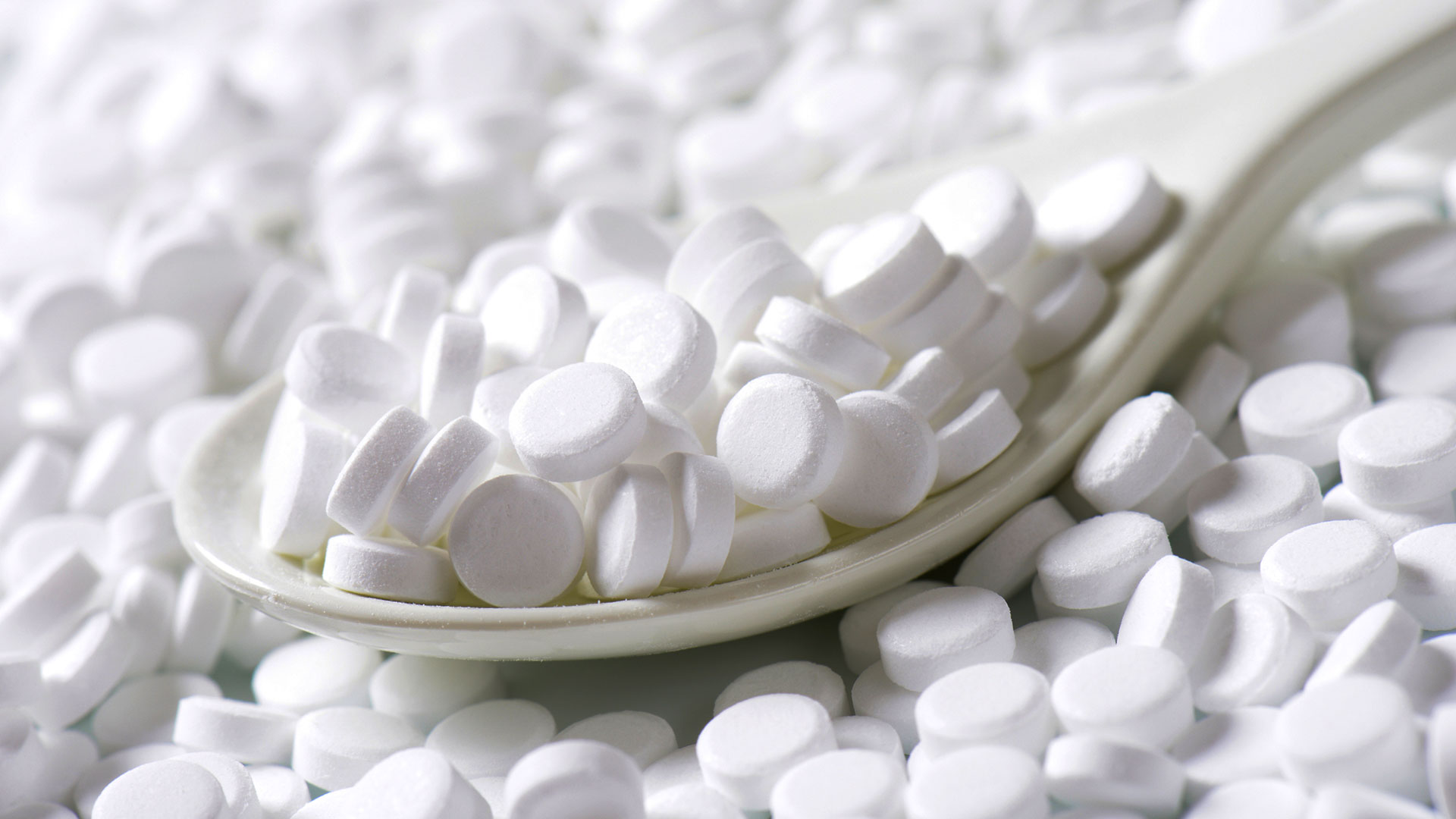
The European Food Safety Authority (EFSA) has re-evaluated aspartame-acesulfame salt, which is used as a sweetener in a range of sugar-free and energy-reduced foods and drinks. EFSA concludes that current uses and estimated intake do not raise health concerns.
Photo: Colourbox
Tuesday 13 October 2026
As part of the re-evaluation, EFSA has updated its 2013 assessment of aspartame with more recent research and new estimates of dietary intake.
“The more recent research gives EFSA no grounds to change the acceptable daily intake. Estimated intake also remains below this level across all age groups,” says Lea Bredsdorff, Senior Researcher at the DTU National Food Institute.
EFSA has re-evaluated the sweetener aspartame-acesulfame salt, also known as E 962. Following ingestion, the substance breaks down into components derived from aspartame and acesulfame K. EFSA has therefore assessed the safety of the two components separately.
EFSA draws on its 2025 assessment of acesulfame K. For aspartame, EFSA has reviewed the research published since its 2013 assessment and updated its estimates of dietary intake.
EFSA maintains the acceptable daily intake for aspartame at 40 milligrams per kilogram of body weight per day. For acesulfame K, estimated intake is generally below the acceptable daily intake of 15 milligrams per kilogram of body weight per day.
Two assessments may appear to conflict
The question of a possible link between aspartame and cancer has received considerable attention since EFSA’s 2013 assessment.
In 2023, the World Health Organization’s International Agency for Research on Cancer (IARC) classified aspartame as possibly carcinogenic to humans (Group 2B). IARC based its classification on limited evidence from human studies and animal experiments. EFSA discusses the classification in its new assessment.
At first glance, IARC’s classification and EFSA’s conclusion may appear to contradict each other. However, the two organisations address different questions.
“The key is to distinguish between a potential hazard and the actual risk. A substance may have properties that lead to an IARC classification without this meaning that people’s dietary exposure poses a health risk,” says Lea Bredsdorff. She adds:
“EFSA does not disregard IARC’s classification. However, EFSA also assesses the strength of the evidence and how much aspartame people actually consume. Taking all the evidence into account, EFSA finds no grounds to change the acceptable daily intake.”
EFSA assesses more recent research on cancer
EFSA has identified five more recent epidemiological studies: one case-control study and four cohort studies. These types of studies can indicate statistical associations but cannot, on their own, establish that aspartame causes cancer.
One of the studies found a statistical association between aspartame intake and an increased risk of certain cancers. Overall, however, the results did not consistently point in the same direction.
EFSA also highlights uncertainties in all five studies. Information on participants’ intake may be imprecise, and other factors may have influenced the results, even though the researchers attempted to account for them. These uncertainties therefore limit the confidence with which EFSA can draw conclusions from the studies.
Considering the human studies alongside findings from animal experiments, EFSA concludes that exposure to aspartame is unlikely to be associated with cancer in humans. EFSA also found no evidence that aspartame can damage genetic material.
The assessment also leads to new recommendations
Although EFSA maintains its overall assessment, the work has led to specific recommendations.
EFSA recommends that the EU update the specifications for E 962. The aim is to ensure that the substance is manufactured from aspartame and acesulfame K that comply with the specifications for the two sweeteners.
EFSA also recommends that the EU review the permitted limits for the impurities arsenic and lead in the specifications for aspartame.
These recommendations do not change the conclusion that current uses and estimated intake do not raise health concerns.
Facts about E 962 and ADI
E 962 is aspartame-acesulfame salt and is used in a range of sugar-free and energy-reduced foods and drinks.
Following ingestion, E 962 breaks down into components corresponding to those derived from aspartame (E 951) and acesulfame K (E 950). K stands for potassium.
ADI stands for acceptable daily intake. It is a scientific estimate of the amount of a substance that a person can consume daily throughout their lifetime without an expected health risk.
The ADI includes a safety margin. It is not a strict threshold above which intake automatically becomes harmful to health.
No separate ADI has been established for E 962 because it breaks down into the two components.
The ADI for aspartame does not apply to people with the metabolic disorder phenylketonuria (PKU). This is not a new recommendation.